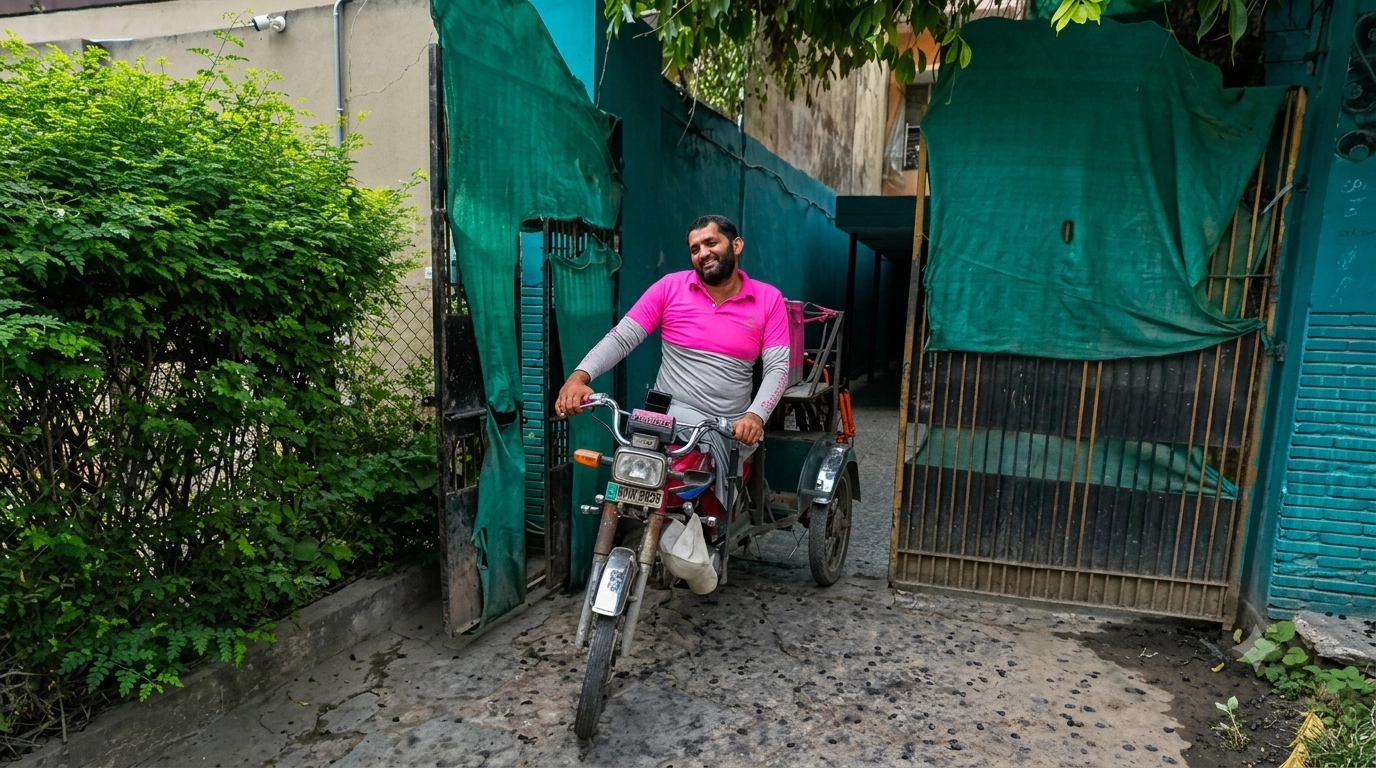
Some stories about motorcycles are about speed, about specs, about which bike is the fastest or the most powerful. This one is about something else entirely. This one is about a 28-year-old from Multan named Hamza Ali, who lost both legs in a road accident five years ago, rebuilt his motorcycle with hand-operated controls, moved to Islamabad alone, and is now one of the top-performing delivery riders in the city.
His story went viral globally this month, covered by the Associated Press and picked up by news outlets across dozens of countries. But we wanted to share it here, because it is a Pakistani story, a motorcycle story, and honestly one of the most remarkable things we have read in a long time.
The Accident That Changed Everything
Around five years ago, Hamza Ali was a regular delivery rider working for a food delivery platform. He was riding a bus one day when it collided with a truck. The accident cost him both legs. The six months that followed were, in his own words, extremely difficult.
For nearly three years after that, he searched for work in Multan. Employer after employer turned him away. The reason was always the same: his disability. He was told, in different ways, that because he could not walk he could not work. He refused to accept that.
The Decision to Start Over
In 2023, acting on advice from a friend, Hamza moved to Islamabad. The reason was practical: the capital's wider roads and smoother surfaces make it easier to handle a modified motorcycle. Using his own savings, he had his bike adapted with hand-operated controls so he could accelerate, brake and steer entirely with his hands. Then he asked his old employer to reactivate his delivery account.
The company asked him one question: was he confident he could do the job?
He said yes. They activated his account. He went back to work.
One of the Top Riders in the City
Since his return, Hamza has not just managed the job. According to colleagues who spoke to the AP, he has become one of the top-performing riders on the platform. He navigates Islamabad's streets every day, collects orders, climbs stairs to make deliveries, and handles everything a two-legged rider would handle. He does all of it on a motorcycle he controls entirely with his hands.
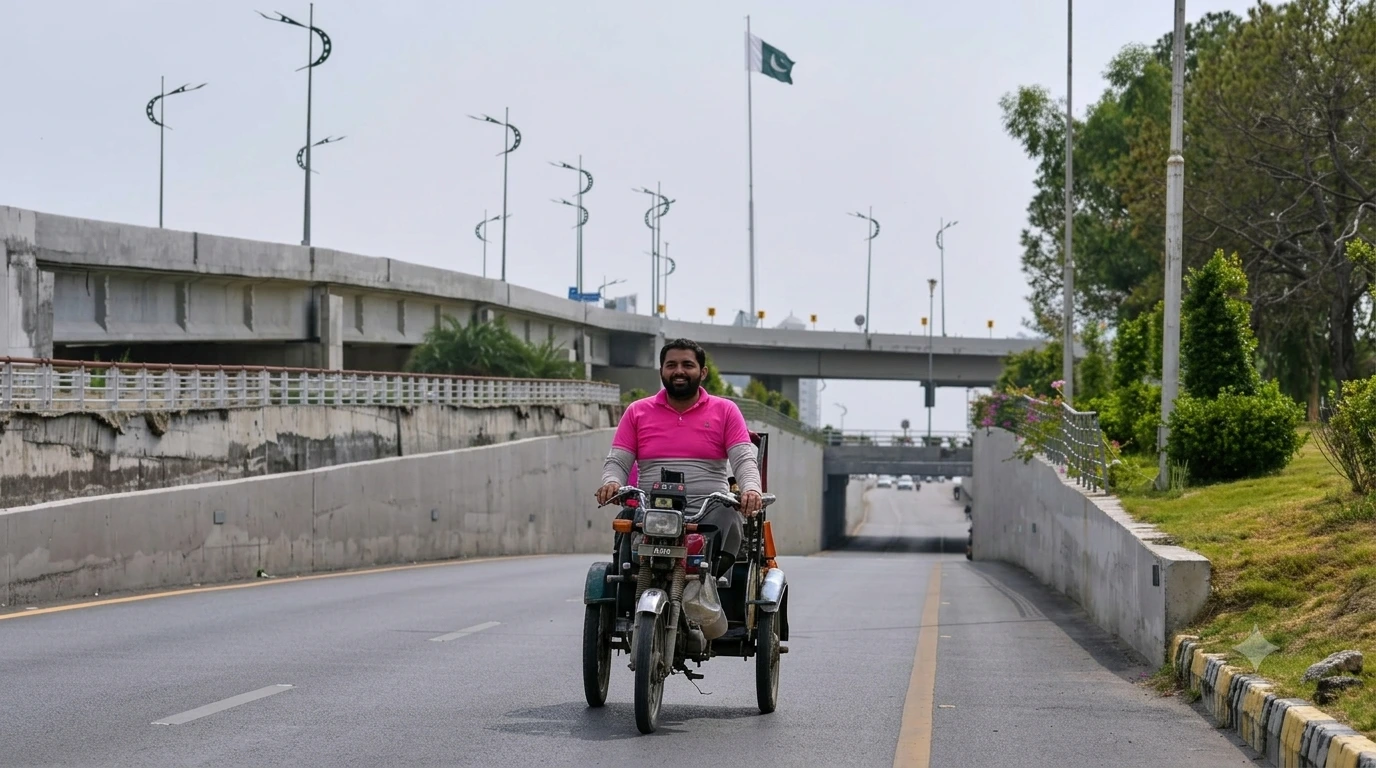
He is matter-of-fact about it. He does not want sympathy. He wants the same thing any rider wants: to do his job, earn his living, and be judged on his performance rather than his condition. His greatest source of strength, he has said, is his mother, who encouraged him to focus on what was still possible rather than what had been lost.
Why This Story Matters
Pakistan has millions of people living with disabilities. A 2023 national census recorded that around three percent of the population lives with some form of disability, though human rights advocates suggest the real figure is considerably higher. Most of them face significant barriers to work, to mobility and to social inclusion.
Hamza Ali's story does not fix any of that. But it does show something important: that a motorcycle, when it is the right tool for the right person, can be a genuine instrument of independence and livelihood, not just for the able-bodied majority but for anyone determined enough to adapt one to their needs.
It also says something about what we mean when we talk about a bike being someone's lifeline. For millions of Pakistanis, a motorcycle is how they get to work, how they feed their families, how they stay connected to the city around them. For Hamza Ali, it is literally all of that and more.
Road Safety: The Other Side of This Story
Hamza's accident happened because a bus collided with a truck. He was a passenger, not the cause. But his story is also a reminder of how serious road accidents are in Pakistan, and how completely they can change a life in a single moment.
Road safety on Pakistani roads is a real and ongoing crisis. Motorcycles are the most common vehicle on our streets and also among the most vulnerable in a collision. Helmets, proper lane discipline, night riding precautions and basic mechanical maintenance are not just rules on paper. They are the difference between a normal day and the kind of day that changes everything.
If you ride, ride carefully. If you are buying a bike, make sure it is mechanically sound. If you are selling one, be honest about its condition. These things matter more than any spec sheet.
Buy, Sell, or Simply Ride
Stories like Hamza's remind us why we built Byke Lelo in the first place. A motorcycle is not just a machine. For most Pakistanis it is freedom, income and independence all in one. We want to make it easier for every rider in Pakistan to find the right bike at the right price, completely free.
Browse used bikes from sellers across Pakistan, check 2026 new bike prices, or list your own bike for free and reach buyers in every city. And if you want to know the full on-road cost before you buy, try the free price calculator that breaks down registration, token tax and insurance for any city in Pakistan.
Hamza Ali is out there right now, somewhere on the streets of Islamabad, doing his deliveries on a bike he adapted with his own hands and his own savings. That is worth remembering the next time you swing a leg over yours.