Walk into any chai dhaba in Lahore, Karachi, or Rawalpindi these days and you will hear the same conversation: petrol ke rate ne tang kar diya hai. With petrol sitting north of Rs 320 per litre, a daily commuter on a 70cc bike can easily burn Rs 5,000 to Rs 6,000 a month on fuel alone. That is before oil changes, tuning, and the small repairs that every petrol bike eventually needs.
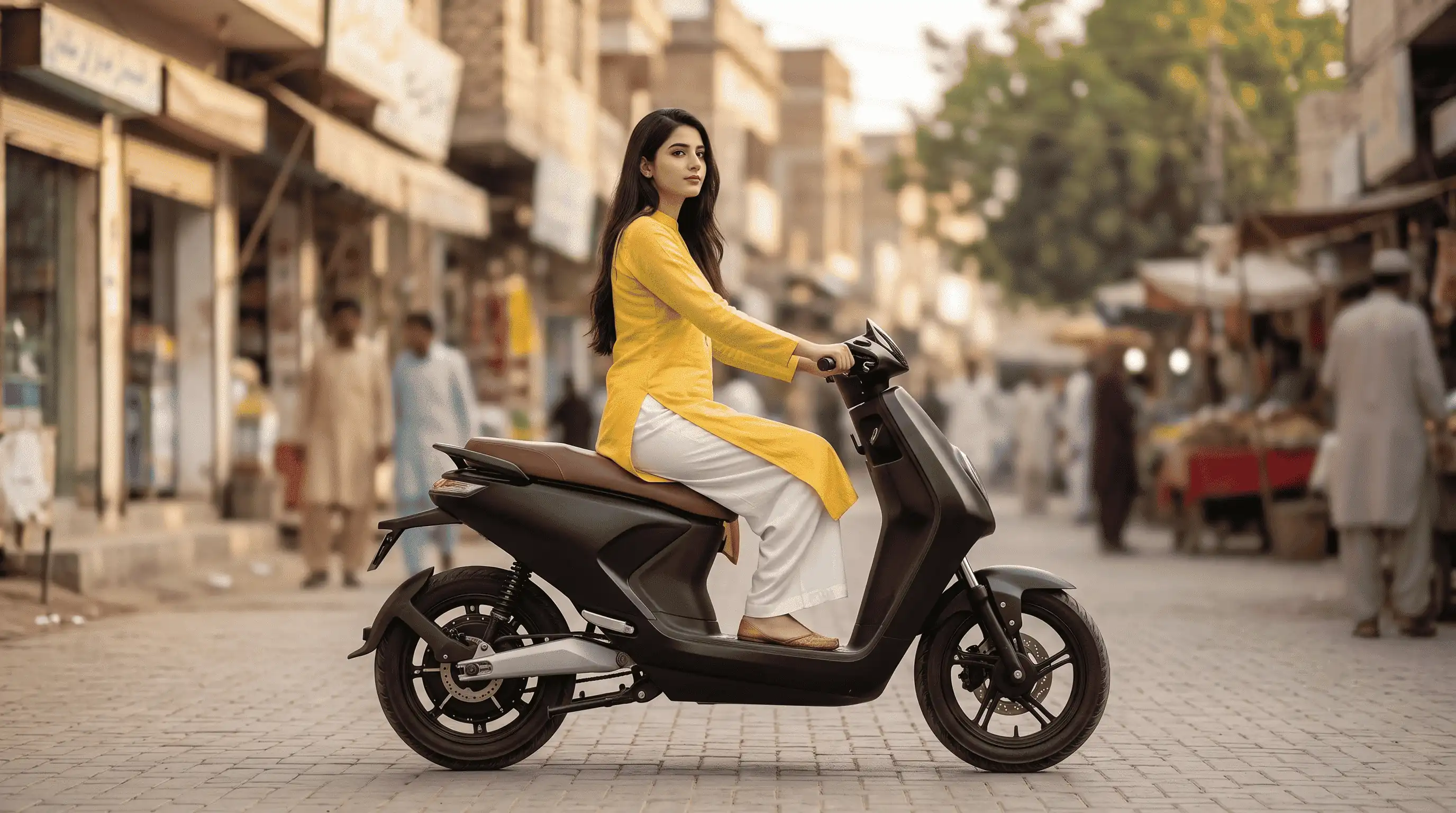
It is no surprise, then, that electric bikes have gone from a curiosity to a serious option in 2026. The government has thrown its weight behind them with the PM Electric Bike Scheme, dozens of brands now sell e-bikes across the country, and "electric bike price in Pakistan" has become one of the most searched terms among riders. But are they actually worth it for a normal commuter, or is it all hype?
This guide gives you straight answers. We will cover real prices, honest range and charging numbers, the government subsidy, a proper cost comparison against petrol, and the things nobody tells you before you buy.
How much do electric bikes cost in Pakistan?
The honest answer: it depends a lot on the battery and the brand. As of 2026, here is roughly how the market breaks down. Treat these as reference prices only, because they change with the city, the dealer, and battery type.
- Entry level e-scooty (Rs 90,000 to Rs 150,000): Small, light, good for short city runs and students. Usually lower speed and shorter range. Brands like YJ Future, Crown, and various local assemblers play here.
- Commuter e-bikes (Rs 150,000 to Rs 300,000): This is the sweet spot for most buyers. Models like the Yadea GT30 (around Rs 189,000), Yadea M3 (around Rs 169,000), Pakzon PE-70D (around Rs 149,900), Jolta, MS, and Vlektra sit in this band. Decent range, proper bike build, better after sales support.
- Premium e-bikes (Rs 300,000 to Rs 700,000): Stronger motors, bigger lithium batteries, longer range, and smart features like GPS and anti theft. The Pakzon PE-100L-SE (around Rs 278,000) and higher end Jolta and Crown models climb into this range.
One important point: do not judge an electric bike on price tag alone. A cheap bike with a weak lead acid battery can cost you more in the long run than a slightly pricier model with a proper lithium or LFP battery. More on that below.
Range and charging: the real numbers
Brands love to advertise big range figures, but real world numbers are usually lower once you add a rider, traffic, and a few inclines. Here is what to actually expect:
- Range per charge: Most commuter e-bikes deliver somewhere between 50 and 90 km on a single charge in real conditions. Premium models with larger batteries can stretch to 100 to 120 km.
- Charging time: Typically 4 to 6 hours from a normal household socket. No special charging station needed, you just plug it in at home overnight.
- Charging cost: Roughly Rs 100 or so per full charge, which works out to around Rs 800 to Rs 1,500 a month for a daily commuter, depending on usage and your electricity tariff.
The simple test: add up your daily kilometres. If you ride 30 to 40 km a day around the city, a commuter e-bike will comfortably handle it on a single overnight charge. If you regularly do long inter city trips, an electric bike is not the right tool yet.
The PM Electric Bike Scheme (PAVE): what you should know
The federal government's Pakistan Accelerated Vehicle Electrification (PAVE) programme is the big reason electric bikes are suddenly affordable for ordinary people. Under the PM Electric Bike Scheme, eligible citizens can buy an approved electric motorcycle at a subsidized price, often with interest free installment options through partner banks.
Key things to understand:
- Subsidy: A direct subsidy is applied to the price of approved electric motorcycles. The exact amount has shifted between Phase 1 and Phase 2 of the scheme, so always confirm the current figure on the official portal before you count on it.
- How it works now: In the latest phase, you pay the net price after the subsidy is already deducted, instead of waiting for a payment afterward. The government transfers the subsidy directly to the manufacturer.
- Financing: On top of the subsidy, partner banks offer installment plans spread over 2 to 3 years, which makes ownership realistic even if you cannot pay upfront.
- Who can apply: The federal scheme is open to citizens nationwide, with quotas including a women's quota. There are also separate provincial schemes, such as the CM Punjab E-Bike Scheme aimed at students.
One safety note: only ever register through the official government portal (pave.gov.pk). Social media is full of fake registration links and agents asking for money. The official process is free.
Electric vs petrol: the honest cost breakdown
This is the question that actually matters. Let us run real numbers for a typical commuter riding about 1,000 km a month.
- Petrol 70cc bike: At roughly 50 km per litre and petrol above Rs 320 per litre, that is about 20 litres a month, or around Rs 5,000 to Rs 6,500 in fuel. Add oil changes and tuning, and you are comfortably over Rs 6,000 a month.
- Electric bike: Charging the same distance costs roughly Rs 800 to Rs 1,500 a month, with almost no routine maintenance (no engine oil, no spark plugs, no tuning).
That is a saving of roughly Rs 4,000 to Rs 5,000 every single month, which adds up to around Rs 50,000 a year. Over the life of the bike, the fuel savings alone can pay back a big chunk of the higher purchase price.
But, and this is important, the maths only works if the bike suits your riding. For a city commuter with a predictable daily route, electric makes strong financial sense. For someone who needs to do long, unpredictable journeys, the savings disappear behind the inconvenience.
Things to check before you buy
If you have decided to seriously look at an electric bike, do not get dazzled by the showroom. Check these first:
- Battery type: Lithium and LFP (LiFePO4) batteries cost more but last longer (often 5 plus years), charge faster, and handle our heat better. Cheaper lead acid or graphene batteries need replacing sooner and degrade quickly. The battery is the single most expensive part of the bike, so this matters most.
- After sales service and spare parts: A great bike with no service centre near you is a headache waiting to happen. Buy from a brand with a dealer presence in your city.
- Warranty: Get the battery and motor warranty in writing, and read what it actually covers.
- Real range, not advertised range: Ask the dealer for the real world range with a rider, and if possible take a test ride.
- Build quality: Cheap container imports may look identical to branded models but often lack warranty, parts, and durability. Be careful.
So, who should actually switch?
Here is the honest verdict.
An electric bike is a smart buy if you: ride mostly within your city, have a predictable daily commute under about 60 km, can charge at home, and want to cut your monthly running costs sharply. For students, office workers, and delivery riders, the numbers are very attractive, especially with the PAVE subsidy.
You should probably stick with petrol (for now) if you: regularly travel long distances between cities, cannot charge reliably at home, deal with heavy load shedding, or need to refuel and go in five minutes with no waiting. The charging infrastructure and resale market are still maturing.
The good news is that the decision keeps getting easier. Prices are falling, battery technology is improving, and the government subsidy lowers the barrier significantly. For a large number of everyday Pakistani commuters in 2026, going electric is no longer a gamble. It is just smart budgeting.
Before you decide, use these free tools
Whether you go electric or stick with petrol, do not buy blind. Here are some free Byke Lelo tools to help you choose with confidence:
- Compare any two bikes side by side with our Bike Comparison tool to see specs and value at a glance.
- Work out the true on road cost with the Bike Price Calculator before you commit.
- Browse real listings of used bikes to see what your money buys in the second hand market.
- Got a bike to sell first? You can list it for free on Byke Lelo in a few minutes.
And if you found this helpful, check out the rest of our buying guides and bike reviews to make your next purchase a paisa vasool one.
Jab byke chahye, sirf Byke Lelo.