
Petrol Is Jumping Around. Your Fuel Average Doesn't Have To.
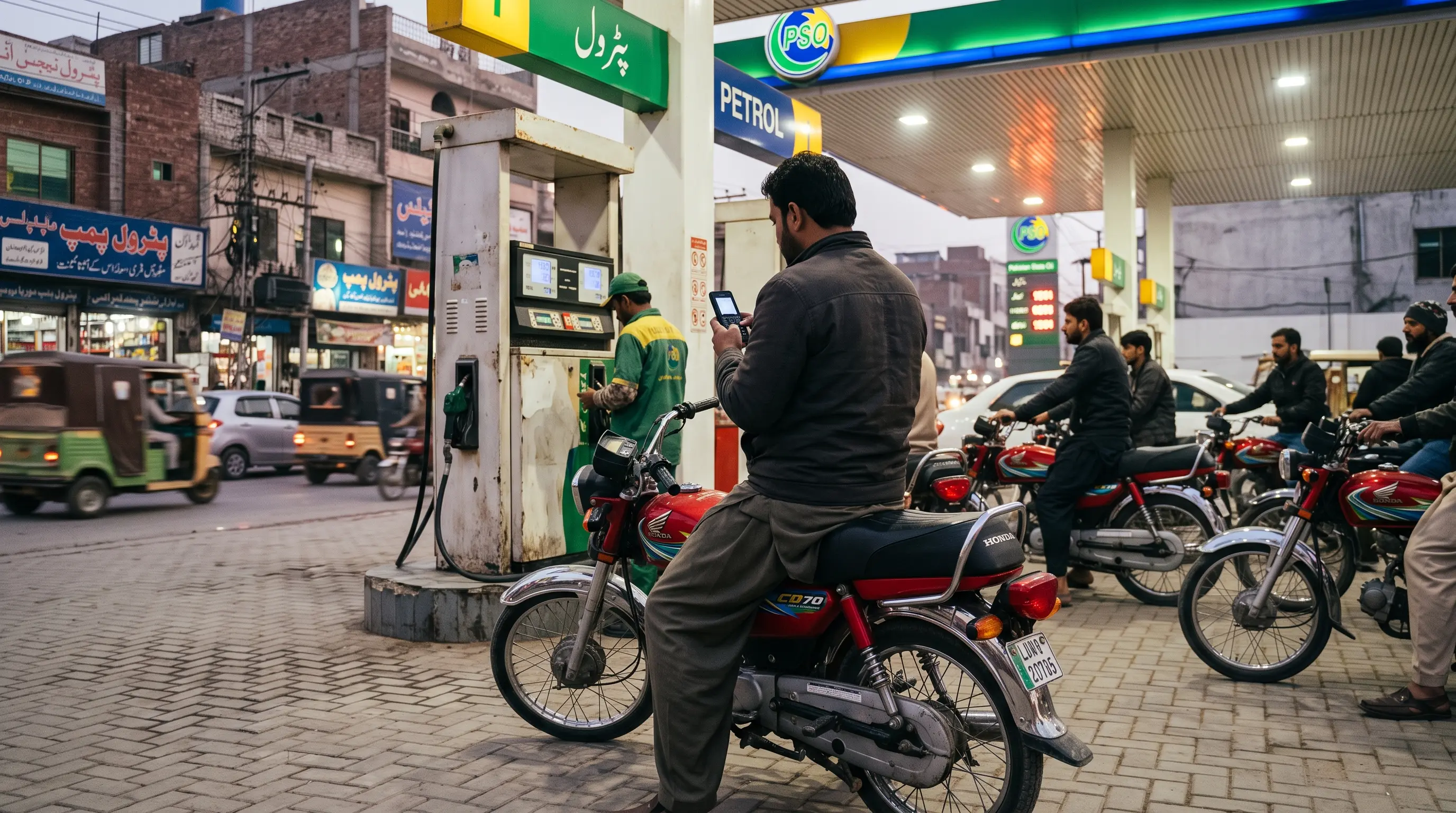
If you filled up this week, you probably noticed two things. The price moved again, and the queue was longer than usual.
Here is what is going on. On 23 October 2026, Brent crude settled at $116.72 a barrel, its highest level in months, because of tension in the Middle East and attacks on Gulf energy routes. In Pakistan, petrol prices are now revised almost every working day. Petrol sat at Rs 377.71 per litre on 23 October after falling Rs 8.59 over the week, but nobody can promise where it goes next.
On 24 October, the Pakistan Petroleum Dealers Association asked people not to panic-buy. Refineries are running and imports from the Gulf are arriving. The queues themselves were creating shortages at some pumps.
So what can a normal rider actually do? You cannot change the oil price. But you can change how many kilometres you squeeze out of every litre, and that adds up faster than most people think.
Please don't store petrol at home
When prices jump, some people fill plastic bottles and keep them in the house. Petrol vapour is extremely flammable and plastic bottles leak. One spark from a switch or a stove is enough. Dealers say supply is holding, so fill your tank normally and leave it at that.
First, Know Your Real Fuel Average
Most riders guess their average. Guessing does not help you save. This takes one tank and no tools:
- Fill the tank to the top at a pump and note the odometer reading. Take a photo of the meter if that is easier.
- Ride normally for a few days. Don't change anything yet.
- Fill to the top again at the same pump if possible, and note how many litres went in.
- Divide the kilometres you rode by the litres you added. That is your real km per litre.
Example: you rode 280 km and it took 6 litres to refill. 280 divided by 6 is about 47 km/l. Write this number down. After trying the tips below, measure again and see the difference for yourself.
What Average Should Your Bike Give?
Company claims are tested in ideal conditions. On real Pakistani roads, with traffic, signals and a passenger now and then, most riders see figures closer to these:
| Bike | Typical Real-World Average | If You Get Less Than |
|---|---|---|
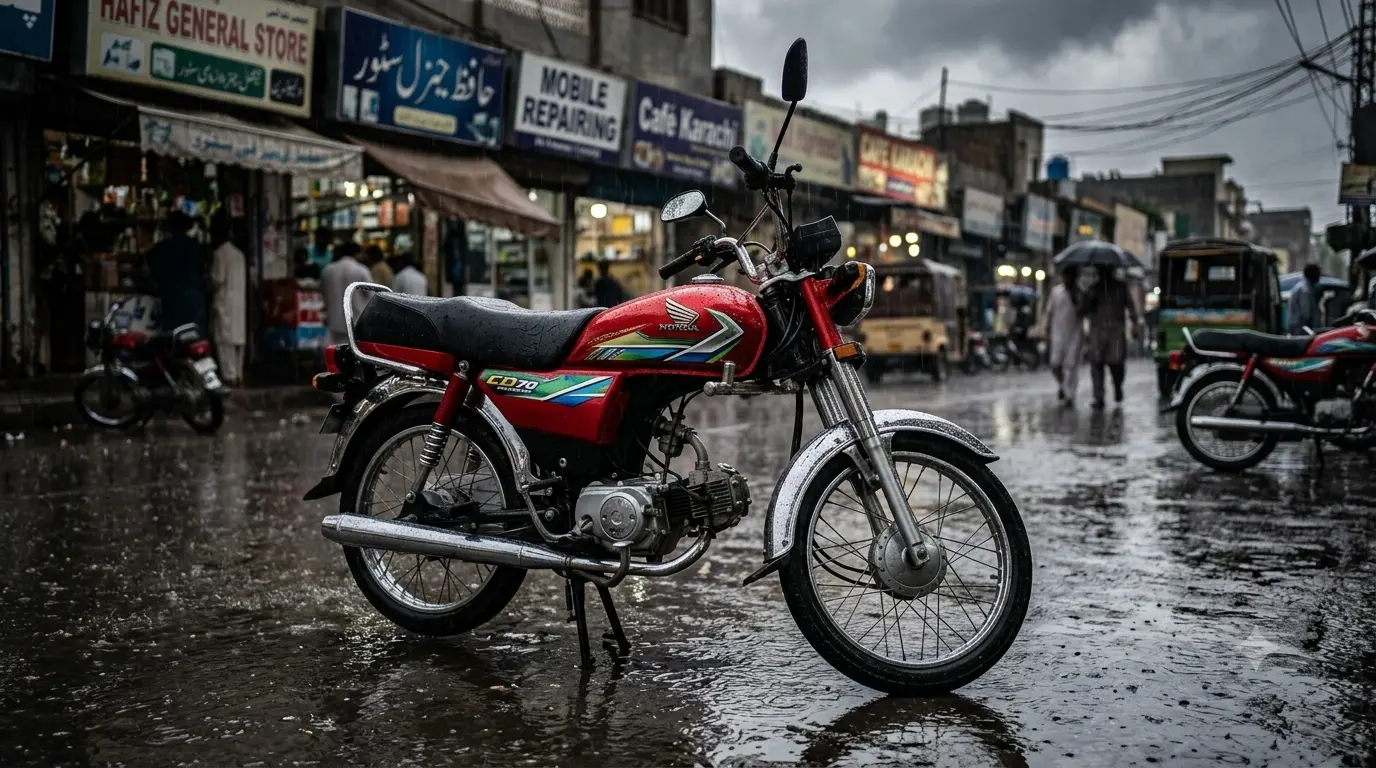
| Honda CD 70, United US 70, other 70cc | 45 to 55 km/l | 40 km/l: time for a service |
| Honda CG 125 | 35 to 45 km/l | 32 km/l |
| Yamaha YBR 125 | 35 to 45 km/l | 32 km/l |
| Suzuki GS 150, Honda CB 150F | 30 to 40 km/l | 28 km/l |
Approximate ranges from everyday city riding. Your figure depends on traffic, riding style, load and the bike's condition.
If your number is well below the range, the good news is that the problem is almost always fixable, and usually cheaply.
12 Ways to Get More From Every Litre
1. Check tyre pressure every week
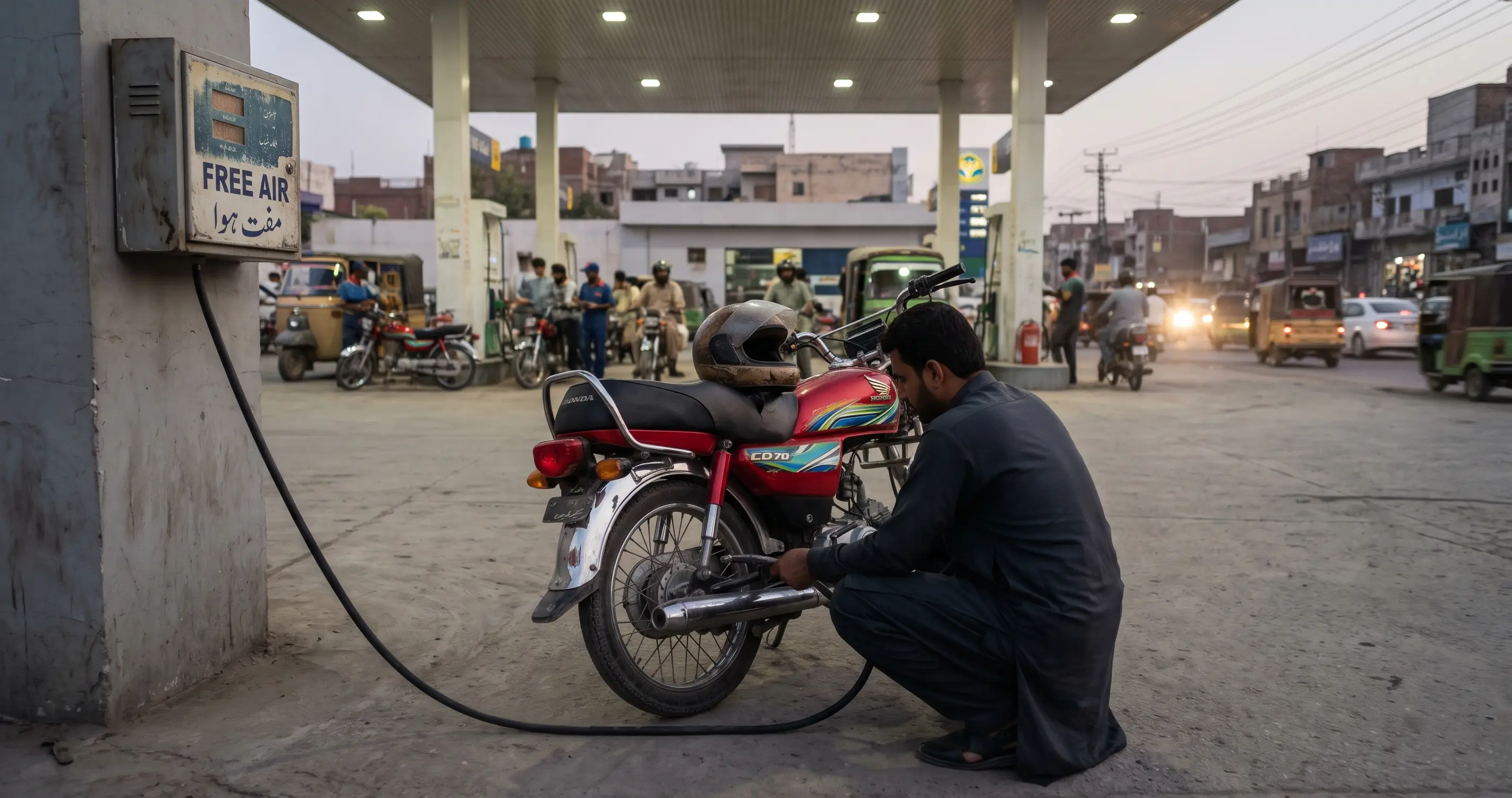
This is the easiest one and the one most people skip. Soft tyres drag on the road and the engine works harder. Use the pressure written in your owner's manual or on the sticker on the bike, and check it at the pump, where the air is usually free. Check when the tyres are cold, before a long ride.
2. Keep the chain clean, oiled and properly tight
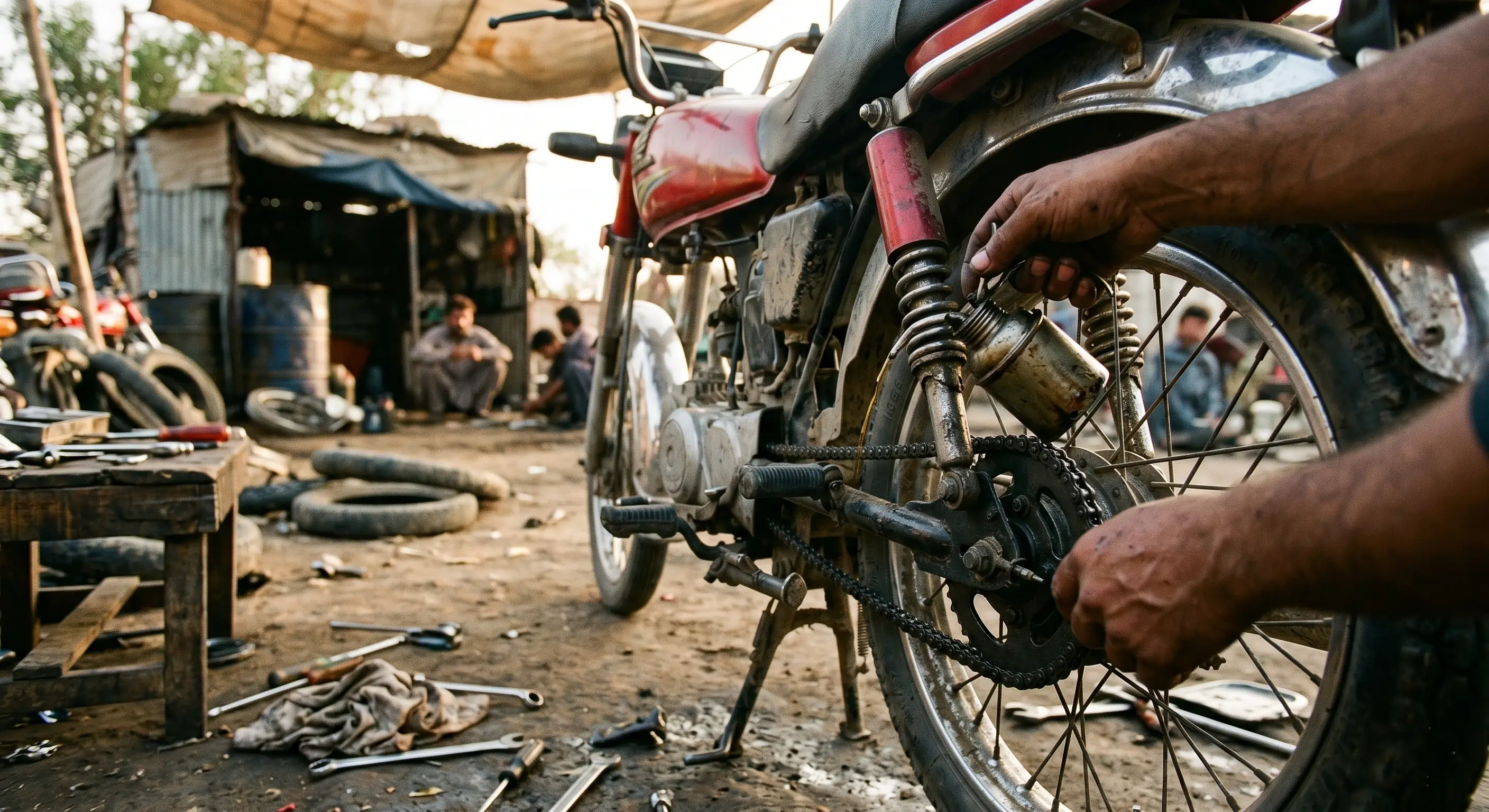
A dry, rusty or loose chain wastes power before it ever reaches the wheel. Clean and lube it every few weeks, more often after rain or dust. If it slaps or hangs low, get it adjusted. If the sprocket teeth look hooked like a shark fin, replace the chain set.
3. Change or clean the air filter
Smog season means a lot of dust and soot. A choked air filter makes the engine run rich, which burns more petrol and can cause black smoke. A new filter for most 70cc and 125cc bikes costs less than one litre of petrol.
4. Get a proper tuning
A carburettor that is set too rich is one of the biggest silent fuel wasters. A good mechanic can set the mixture and idle in about half an hour. If someone promises "double average" from a gadget or a special plug, walk away. A clean, correctly tuned engine is the real upgrade.
5. Use the right engine oil and change it on time
Old, thick or wrong-grade oil adds friction. Use the grade your manual recommends and change it on schedule. Fresh oil does not just protect the engine, it lets it turn more freely.
6. Look after the spark plug
A worn plug gives a weak spark, so part of the fuel does not burn properly. Plugs are cheap. Have it checked at every service and replace it when the mechanic says it is worn.
7. Ride smoothly. Really, this is the big one.
Hard acceleration from every signal, then hard braking at the next one, throws away the petrol you just burned. Open the throttle gently, look ahead, and roll off early when you see red. On most commuter bikes, a steady 40 to 50 km/h in the right gear is where the engine is happiest.
8. Change gear at the right time
Revving hard in first and second gear burns fuel. So does crawling in top gear while the engine shakes. Shift up once the bike is moving comfortably, and shift down before the engine starts to struggle.
9. Turn the engine off at long signals
Idling still burns petrol. At a long signal or when you are waiting for someone, switching off for a minute or more saves fuel. For a quick 10 second stop, leave it running.
10. Don't ride with the choke on
The choke is for cold starts only. Ride a whole commute with it half on and your average drops sharply. On winter mornings, push it back in as soon as the engine runs smoothly.
11. Check for dragging brakes and carry less weight
Lift each wheel and spin it. If it stops quickly or rubs, the brake is dragging and the engine is fighting it all day. Also, that heavy toolbox, extra carrier and second helmet you carry every day all cost fuel. Carry what you need.
12. Use your petrol relief tokens
This does not improve your average, but it does cut your bill. If your bike is registered on the PM Petrol Relief Scheme, you get up to Rs 2,000 off a month. If you have not registered yet, our step by step 9771 petrol subsidy guide shows you how.
The fuel myths you can ignore
"Fill up early in the morning for more petrol." The difference is too small to matter. "Hi-octane gives a commuter bike better average." A 70cc or 125cc engine is made for normal petrol, so you just pay more. "Remove the silencer baffle for better pickup." It makes the bike louder, can upset the fuelling and can get you stopped at a smog checkpoint.
How Much Can You Actually Save?
Let's take a CD 70 rider whose average goes from 45 km/l to 55 km/l after a service and a change in riding style. At Rs 377.71 per litre:
| Monthly Riding | Cost at 45 km/l | Cost at 55 km/l | Saved per Month | Saved per Year |
|---|---|---|---|---|
| 600 km (20 km a day) | Rs 5,036 | Rs 4,120 | Rs 916 | Rs 10,988 |
| 900 km (30 km a day) | Rs 7,554 | Rs 6,181 | Rs 1,373 | Rs 16,482 |
| 1,500 km (delivery or long commute) | Rs 12,590 | Rs 10,301 | Rs 2,289 | Rs 27,470 |
Estimates only. Petrol prices change almost daily, so the rupee figures will move, but the percentage you save stays about the same.
That is a new set of tyres, or a full year of oil changes, just from looking after the bike and riding a little calmer. Want to work it out for your own bike? Use the fuel cost calculator on our petrol price in Pakistan today page.
For a full picture of what your bike costs to keep on the road, including oil, tyres and token tax, read what a CD 70 really costs to run in a year.
Is It Time to Think About a Different Bike?
If you ride a 150cc for a short city commute, a 125cc or 70cc might save you real money every month. Our comparison of 70cc vs 125cc bikes in Pakistan covers the trade offs. And if fuel prices keep climbing, an electric bike starts to make more sense for daily city rides. You can compare new electric bikes with official prices, or browse used bikes for sale if you want to downsize without spending much.
For the rest of the basics, see our 10 bike maintenance tips every Pakistani rider should know.
Frequently Asked Questions
What is the real fuel average of a Honda CD 70?
Most riders get somewhere between 45 and 55 km per litre in normal city riding. A well serviced bike ridden smoothly sits at the top of that range. Below 40 km/l usually means the bike needs tuning, a new air filter or a chain adjustment.
Why has my bike's average suddenly dropped?
The common reasons are low tyre pressure, a dirty air filter, a dry or loose chain, a carburettor that needs tuning, a worn spark plug, or a dragging brake. Check the cheap things first: tyres, chain and air filter.
Does hi-octane petrol improve average in a 70cc or 125cc bike?
No, not in a meaningful way. These engines are designed for normal petrol. Hi-octane costs more per litre, so you end up spending more for the same distance.
Should I fill my tank full or keep it half?
Either is fine. The weight difference on a bike is small. What matters more is not panic-buying or storing extra petrol in bottles, which is dangerous.
How often do petrol prices change in Pakistan now?
In October 2026, prices were revised on almost every working day, with each new rate announced the evening before. Check our petrol price page for today's rate before you fill up.
The Bottom Line
Nobody in Pakistan can control what oil costs. But a correctly inflated tyre, a clean chain, a fresh air filter and a calmer right hand can easily give you 5 to 10 extra km per litre. Measure your average this week, fix the small things, and measure again. Your wallet will notice before you do.
Fuel and oil prices are based on reports up to 24 October 2026, including Dawn, Pakistan Observer and PakWheels. Prices change often, so always check the latest rate.