The IMF Wants Pakistan's EV Tax Break Gone
Pakistan's electric vehicle tax structure could change sharply. During talks on its current loan programme, the International Monetary Fund has reportedly asked Pakistan to end the 1% concessional sales tax on electric vehicles and EV charging stations, and charge the standard 18% rate instead.
The IMF's argument is that EVs are currently positioned more as a luxury product than a necessity, and that if the government wants to support them, direct subsidies are better than tax breaks. For buyers, the question is simple: will electric bikes, rickshaws and cars get more expensive, and should you buy now or wait?
What Is Actually Happening
- Now: locally assembled electric vehicles in Pakistan pay a concessional 1% sales tax instead of the standard 18%. This concession is in law until 30 June 2027.
- The draft Auto Policy 2026-31 proposed keeping the 1% rate for eligible electric and new-energy vehicles, along with exemptions from federal excise duty and withholding tax, and 1% customs duty on EV charging equipment.
- The IMF objected during its review talks in September and October 2026, calling the reduced rate discriminatory and pushing for the standard 18% on EVs and charging stations.
- Next step: the Ministry of Industries and Production is expected to brief the Prime Minister and take the revised auto policy to the ECC and cabinet. Any actual change needs a formal FBR notification or a Finance Act amendment.
Nothing has changed yet
As of 7 October 2026, the 1% rate is still the law. This is an IMF demand under negotiation, not a new tax. If a dealer tells you prices "went up because of the IMF", ask to see the notification.
Which Vehicles Get the 1% Rate Today
| Vehicle | Current Sales Tax |
|---|---|
| Locally assembled electric cars and SUVs (battery up to 50 kWh) | 1% |
| Locally assembled electric light commercial vehicles (up to 150 kWh) | 1% |
| Locally made electric bikes, rickshaws and loaders | 1% (reported) |
| EV charging stations and equipment | 1% |
| Imported fully built (CBU) electric cars | 12.5% |
| Normal petrol vehicles | 18% |
Based on reporting of the Sales Tax Act schedule and the draft auto policy. Reports so far focus on cars. It is not yet clear whether the IMF's demand also covers electric two and three wheelers.
How Much Prices Could Rise
If the full 18% replaced 1%, here is roughly what today's prices would become. These figures assume the whole tax increase is passed on to the buyer, which is usually what happens.
| Current Price (at 1%) | Price at 18% | Increase |
|---|---|---|
| Rs 150,000 e-scooty | About Rs 175,000 | About Rs 25,000 |
| Rs 200,000 e-bike | About Rs 234,000 | About Rs 34,000 |
| Rs 250,000 e-bike | About Rs 292,000 | About Rs 42,000 |
| Rs 350,000 premium e-bike | About Rs 409,000 | About Rs 59,000 |
| Rs 1,000,000 e-rickshaw or loader | About Rs 1,168,000 | About Rs 168,000 |
| Rs 10 million EV car (taxable value) | Tax of Rs 1.8 million instead of Rs 100,000 | About Rs 1.7 million |
Our calculation: the 1% tax is removed from today's price and 18% applied instead. Bike and rickshaw rows apply only if the final change covers them.
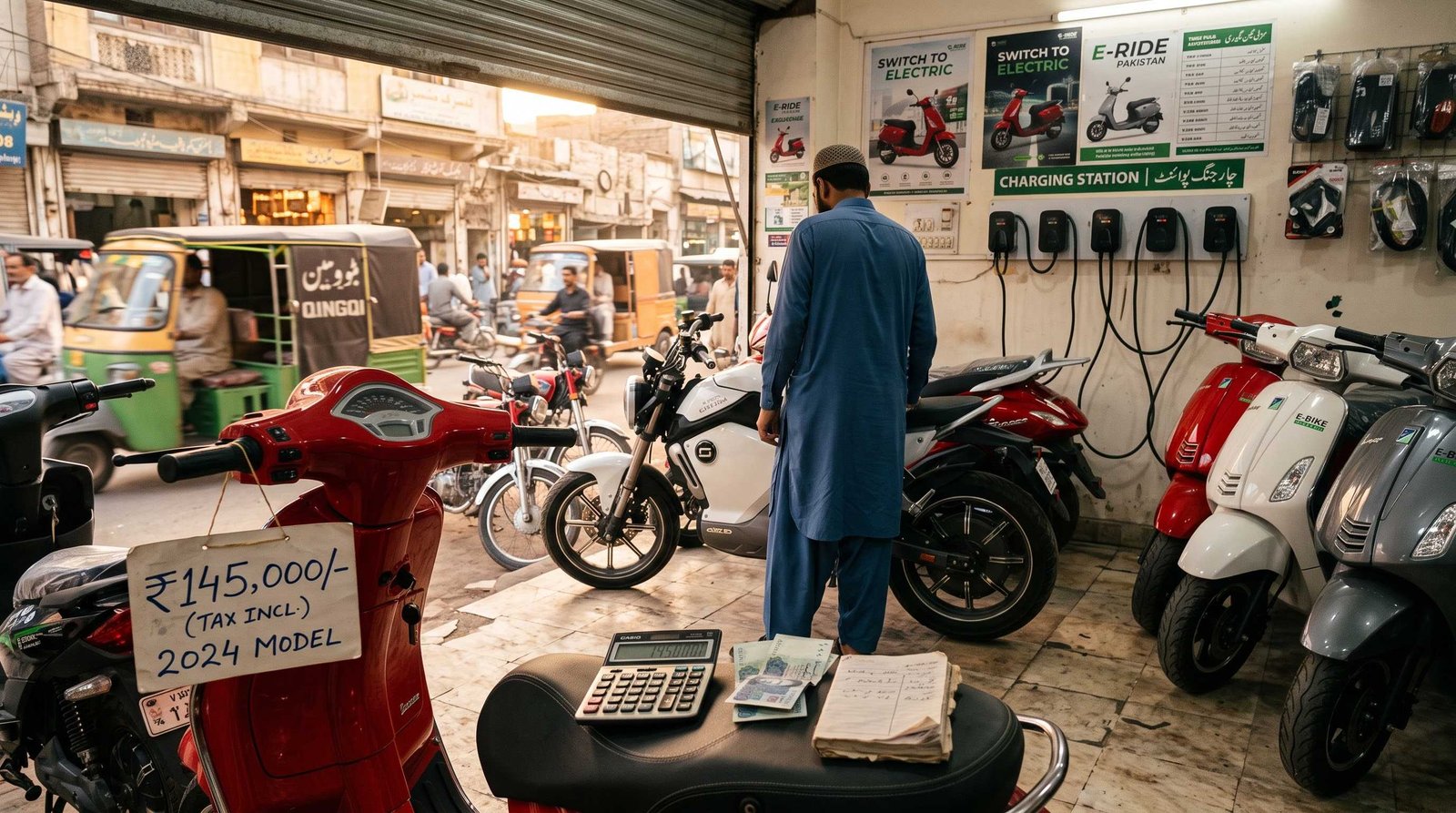
For e-bike buyers, that increase could wipe out a big part of the PM Electric Bike Scheme subsidy of Rs 80,000. Charging stations would also cost more to set up, which could slow down the charging and battery swap networks that brands like Inverex are building.
Why the IMF Wants This
- Revenue: Pakistan collects very little tax on EVs at 1%, and the IMF wants fewer special exemptions across the tax system.
- "Luxury" argument: the IMF sees EV cars mainly bought by wealthier buyers, so a tax break mostly helps people who could pay anyway.
- Subsidies instead: it prefers targeted support, like the Rs 80,000 PAVE subsidy, over a blanket low tax rate.
The counter-argument from the industry is that two and three wheelers are not luxury items at all. For delivery riders, students and rickshaw drivers, an e-bike or e-rickshaw is the cheapest way to beat petrol near Rs 390 a litre. That is why the final decision on bikes and rickshaws matters more to ordinary buyers than the decision on cars.
Should You Buy an Electric Bike Now or Wait?
| If you... | What makes sense |
|---|---|
| Already planned to buy an e-bike or e-rickshaw in the next few months | Buying sooner protects you from a possible price rise. The 1% rate is guaranteed only while the law stays unchanged. |
| Are waiting for the PAVE scheme | Keep your documents ready. A tax rise would make the Rs 80,000 subsidy even more valuable. |
| Are unsure whether electric suits you | Don't rush because of a news headline. Check your daily distance and charging first. |
| Want a car | The impact is largest on EV cars. Watch for the cabinet decision on the auto policy. |
Not sure whether an e-bike is right for you? Our electric bikes in Pakistan guide compares prices, range and running cost against a petrol bike, and Pakistan's electric bike boom explains the payback period and the risks of choosing a new brand. Punjab residents should also check the CM Punjab E-Bike Scheme.
Thinking of an e-rickshaw or loader for business? See our rickshaw and loader price guide, where the tax difference matters most.
Before you decide
See every model and current price on the electric bikes page.
Compare an e-bike with a petrol bike like the Honda CD 70 using the comparison tool.
Check today's petrol price and the real on-road cost with the price calculator.
Frequently Asked Questions
What is the current sales tax on electric vehicles in Pakistan?
Locally assembled electric vehicles pay a concessional 1% sales tax, compared with the standard 18%. The concession is in law until 30 June 2027.
Has the sales tax on EVs been increased to 18%?
No. As of 7 October 2026, the IMF has only asked for it during loan talks. Any change needs a formal FBR notification or a Finance Act amendment.
Will electric bike prices go up in Pakistan?
Only if the final decision covers electric two wheelers. If 18% replaced 1%, a Rs 200,000 e-bike would cost around Rs 234,000. Reports so far mainly discuss electric cars.
Why does the IMF want to end the EV tax concession?
The IMF considers EVs mostly a luxury purchase and wants fewer tax exemptions. It prefers direct, targeted subsidies over a low sales tax rate.
Will EV charging stations be taxed more?
The IMF has reportedly asked for charging stations to move from 1% to 18% as well, which would raise the cost of building charging and battery swap networks.
Does this affect the PM Electric Bike Scheme?
The Rs 80,000 PAVE subsidy is separate and not part of this demand. But if bike prices rise because of tax, the subsidy would cover a smaller share of the price.
Based on reports of Pakistan's talks with the IMF published between 3 and 6 October 2026. No official tax change had been notified at the time of writing. We will update this article when the government decides. Price examples are our own estimates.
Jab byke chahye, sirf Byke Lelo.